


As a supplier of Fluorine Removal Reagent, I've witnessed firsthand the importance of this product in various industrial processes. One question that often comes up from our clients is whether the Fluorine Removal Reagent is affected by temperature changes during the reaction. In this blog post, I'll delve into this topic, exploring the scientific aspects and practical implications of temperature on the performance of our Fluorine Removal Reagent.
Understanding Fluorine Removal Reagent
Before we discuss the impact of temperature, let's briefly understand what Fluorine Removal Reagent is and how it works. Our Fluorine Removal Reagent is a specially formulated chemical compound designed to effectively remove fluorine from industrial wastewater, process solutions, or other liquid media. It works by reacting with fluorine ions, forming insoluble compounds that can be easily separated from the liquid phase through precipitation or filtration.
The reaction mechanism of our Fluorine Removal Reagent typically involves a series of chemical reactions, including complexation, precipitation, and ion exchange. These reactions are influenced by various factors, such as the concentration of fluorine ions, the pH of the solution, and the presence of other impurities. Temperature is another crucial factor that can significantly affect the reaction rate and efficiency of the Fluorine Removal Reagent.
The Impact of Temperature on Chemical Reactions
In general, temperature plays a vital role in chemical reactions. According to the Arrhenius equation, the rate constant of a chemical reaction is exponentially related to the temperature. As the temperature increases, the kinetic energy of the reactant molecules also increases, leading to more frequent and energetic collisions between the molecules. This results in a higher reaction rate and a shorter reaction time.
However, the relationship between temperature and reaction rate is not always straightforward. Some chemical reactions may have an optimal temperature range where the reaction rate is maximized. Beyond this range, the reaction rate may decrease due to factors such as thermal decomposition of the reactants or products, changes in the reaction mechanism, or the formation of unwanted side products.
Temperature Effects on Fluorine Removal Reagent
When it comes to our Fluorine Removal Reagent, temperature can have both positive and negative effects on the reaction. On the one hand, increasing the temperature can enhance the reaction rate and improve the efficiency of fluorine removal. This is because higher temperatures provide more energy for the reactant molecules to overcome the activation energy barrier and react with each other. As a result, the formation of insoluble fluorine compounds is accelerated, leading to a faster and more complete removal of fluorine from the solution.
On the other hand, excessive temperature can also have detrimental effects on the performance of the Fluorine Removal Reagent. At high temperatures, the reagent may undergo thermal decomposition, losing its reactivity and effectiveness. Additionally, high temperatures can increase the solubility of some of the reaction products, making it more difficult to separate them from the solution. This can result in a lower removal efficiency and a higher residual fluorine concentration in the treated solution.
Optimal Temperature Range for Fluorine Removal
Based on our extensive research and practical experience, we have determined that the optimal temperature range for using our Fluorine Removal Reagent is between 20°C and 40°C. Within this range, the reaction rate is relatively high, and the removal efficiency is maximized. At temperatures below 20°C, the reaction rate may be too slow, resulting in a longer reaction time and a lower removal efficiency. At temperatures above 40°C, the risk of thermal decomposition and increased solubility of the reaction products becomes more significant, which can negatively impact the performance of the reagent.
It's important to note that the optimal temperature range may vary depending on the specific application and the characteristics of the solution being treated. In some cases, it may be necessary to adjust the temperature to achieve the best results. For example, if the solution contains a high concentration of fluorine ions or other impurities, a slightly higher temperature may be required to ensure complete removal of fluorine. Conversely, if the solution is sensitive to temperature changes or if energy consumption is a concern, a lower temperature may be preferred.
Practical Considerations for Temperature Control
In industrial applications, maintaining the optimal temperature for the Fluorine Removal Reagent can be challenging. There are several factors to consider, such as the initial temperature of the solution, the heat generated during the reaction, and the heat loss to the environment. To ensure consistent and efficient performance of the reagent, it's essential to implement appropriate temperature control measures.
One common approach is to use a heating or cooling system to adjust the temperature of the solution. This can be achieved through the use of heat exchangers, heaters, or coolers. The heating or cooling system should be designed to provide precise temperature control and to maintain the temperature within the optimal range throughout the reaction process.
Another important consideration is the insulation of the reaction vessel or equipment. Proper insulation can help reduce heat loss to the environment and minimize the energy consumption required to maintain the desired temperature. Additionally, it can prevent the formation of temperature gradients within the solution, which can affect the reaction rate and efficiency.
Conclusion
In conclusion, temperature is a critical factor that can significantly affect the performance of our Fluorine Removal Reagent. While increasing the temperature can enhance the reaction rate and improve the efficiency of fluorine removal, excessive temperature can also have negative effects on the reagent's reactivity and effectiveness. Therefore, it's essential to maintain the temperature within the optimal range of 20°C to 40°C to achieve the best results.
As a supplier of Fluorine Removal Reagent, we are committed to providing our customers with high-quality products and technical support. If you have any questions or need further information about the temperature effects on our Fluorine Removal Reagent or other aspects of fluorine removal, please don't hesitate to contact us. We'll be happy to assist you in finding the most suitable solution for your specific needs.
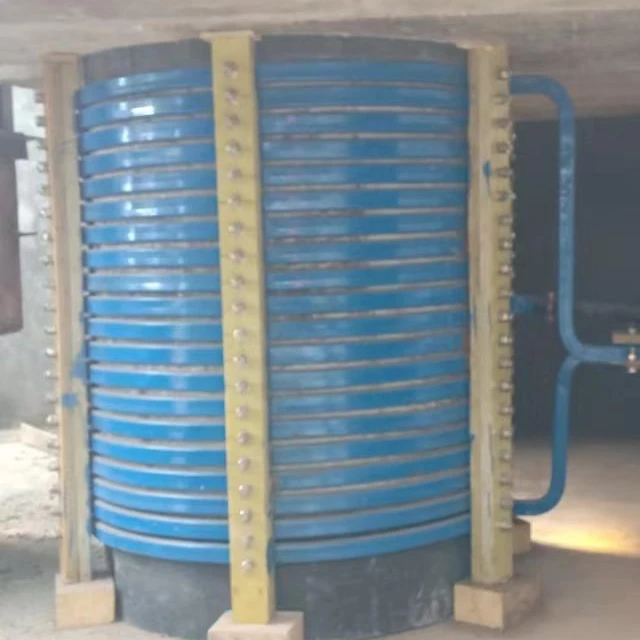
In addition to our Fluorine Removal Reagent, we also offer other products and services related to industrial water treatment and metal extraction. For example, our Cobalt Removal Reagent is designed to effectively remove cobalt from zinc extraction solutions, while our Zinc Powder Distillation Furnace is used for the production of high-quality zinc powder. If you're interested in learning more about these products or exploring potential business opportunities, please reach out to us for a detailed discussion.

We look forward to the opportunity to work with you and help you achieve your industrial goals.
References
- Atkins, P. W., & de Paula, J. (2014). Physical Chemistry (10th ed.). Oxford University Press.
- Smith, J. M., Van Ness, H. C., & Abbott, M. M. (2005). Introduction to Chemical Engineering Thermodynamics (7th ed.). McGraw-Hill.


