


Hey there! As a supplier of Fluorine Removal Reagent, I often get asked about how these nifty little products work. So, I thought I'd take some time to break it down for you all in a way that's easy to understand.

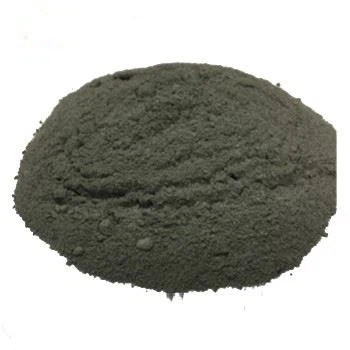
First off, let's talk about why we even need fluorine removal in the first place. Fluorine can be a real troublemaker in a lot of industrial processes. It can cause corrosion in equipment, mess up the quality of products, and even pose environmental and health risks if it's released into the environment. That's where our Fluorine Removal Reagent comes in handy.
So, how does it actually work? Well, it all boils down to some good old - fashioned chemistry. Most of our Fluorine Removal Reagents work through a process called precipitation. When the reagent is added to a solution that contains fluorine ions, it reacts with those ions to form an insoluble compound. This compound then precipitates out of the solution, effectively removing the fluorine from it.
Let's dig a bit deeper into the chemistry behind it. Many of our reagents contain metal ions like calcium, aluminum, or magnesium. These metal ions have a high affinity for fluorine ions. When they come into contact with each other in the solution, they form metal - fluoride compounds. For example, if we use a calcium - based reagent, the calcium ions (Ca²⁺) will react with the fluorine ions (F⁻) to form calcium fluoride (CaF₂). Calcium fluoride is insoluble in water, so it will start to form solid particles and settle at the bottom of the container.
Another way some reagents work is through adsorption. Adsorption is like when a sponge soaks up water, but instead, it's about a solid material attracting and holding onto fluorine ions. Some of our reagents are made up of porous materials with a large surface area. These materials have sites on their surface that can attract and bind to fluorine ions. Once the fluorine ions are attached to the surface of the adsorbent, they are removed from the solution.
The choice of which type of reagent to use depends on a few factors. One of the main factors is the concentration of fluorine in the solution. If the fluorine concentration is really high, a precipitation - based reagent might be more effective because it can quickly remove large amounts of fluorine. On the other hand, if the fluorine concentration is relatively low, an adsorption - based reagent could be a better choice as it can target and remove the remaining trace amounts of fluorine.
The pH of the solution also plays a crucial role. Different reagents work best at different pH levels. For example, some aluminum - based reagents work better in slightly acidic conditions, while calcium - based reagents can be more effective in neutral to slightly alkaline conditions. So, it's important to adjust the pH of the solution before adding the reagent to ensure optimal performance.
Now, let's talk about the applications of our Fluorine Removal Reagent. It's used in a wide range of industries. In the zinc extraction industry, for instance, fluorine can cause problems during the extraction process. Using our Fluorine Removal Reagent helps to ensure that the final zinc product is of high quality and that the equipment used in the extraction process doesn't get damaged by corrosion.
In the wastewater treatment industry, our reagent is a game - changer. Many industrial processes generate wastewater that contains fluorine. If this wastewater is discharged into the environment without proper treatment, it can contaminate water sources and harm aquatic life. By using our Fluorine Removal Reagent, wastewater treatment plants can remove fluorine from the water before it's released, making it safer for the environment.
But our product isn't the only one in our arsenal. We also offer Chlorine Removal Reagent and Cobalt Removal Reagent. Chlorine can also cause corrosion and affect the quality of products in many industries, and our chlorine removal reagent works in a similar way to the fluorine one, by either precipitation or adsorption. The cobalt removal reagent is used in industries where cobalt needs to be removed from solutions, such as in the mining and metal - refining industries.
If you're in an industry that needs to remove fluorine from solutions, you might be wondering how to use our reagent. It's actually quite straightforward. First, you need to analyze the solution to determine the concentration of fluorine and the pH level. Then, based on these results, you can choose the appropriate reagent and calculate the amount needed. Once you've added the reagent to the solution, you'll need to stir it well to ensure proper mixing. After that, you just need to wait for the precipitation or adsorption process to occur, and then you can separate the solid particles from the solution using methods like filtration or sedimentation.
Of course, every situation is different, and we're here to help you every step of the way. Our team of experts can provide you with detailed guidance on how to use our products effectively. Whether you're dealing with a small - scale operation or a large - scale industrial process, we've got the knowledge and experience to ensure that you get the best results.
So, if you're interested in learning more about our Fluorine Removal Reagent or any of our other products, don't hesitate to reach out for a chat. We're always happy to discuss your specific needs and come up with a customized solution for you. Whether you're looking to improve the quality of your products, protect your equipment, or meet environmental regulations, our reagents can make a big difference. Contact us today to start the conversation and see how we can help you with your fluorine removal needs.
References
- Principles of Environmental Chemistry.
- Industrial Wastewater Treatment Handbook.


